
As an Amazon Associate I earn from qualifying purchases.
I ring a bell at the start and end of every sit. Not because the sound is magic, but because it draws a line around the practice: this block of time is different from checking email on the couch. After years of trying to begin silently and drifting into planning mode, that single chime became the most reliable cue I own.
Ten options below, from pocket hand bells to a full bowl-and-cymbal set. I sorted them by how I actually use them: travel, home altar, group class, or gift. If you want melodic patterns instead of one clean strike, my guide to meditation drums covers steel tongue drums that play short sequences before you sit.

10 Best Meditation Bells
1. Himalayan Bazaar Hand Bell (Best Pocket Bell)

Fits in my palm, rings clear, and travels in a side pocket to a studio or park bench. The etched handle looks more considered than plain brass stock, and the tone is bright without being shrill. I use it when I need one decisive strike to mark the beginning, not a long sustain.
It is smaller than temple bells you may have seen in photos, so check the dimensions if you want a deep, room-filling sound. Handle with care; thin brass can dent if it rolls off a shelf. For personal daily practice, the size is an advantage, not a flaw.
2. Tibetan Hand Bell Set (Best Traditional Pair)

Two matched brass bells with hanging holes, so you can keep them on a wall hook beside your cushion. Weight feels substantial for the size, and the strike is crisp without ringing on too long. Good for alternating left-right tones in a short opening ritual.
Volume suits a bedroom or small living room, not a yoga hall with twenty people. The set is two bells only; larger groups may need something louder from this list. For home practice with a slightly ceremonial feel, this pair earns its spot.
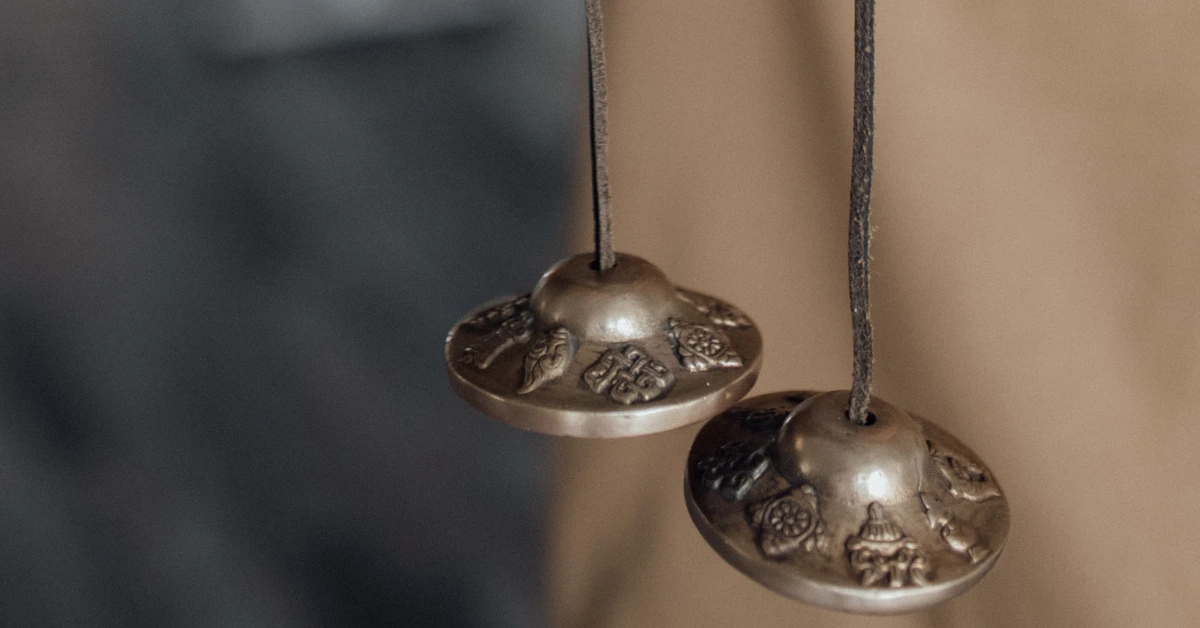
3. Himalayan Bazaar Tingsha Cymbals (Best Cymbal Tone)

Tingsha cymbals produce a different texture than a hand bell: two plates meeting, then a shimmer of overtones that fades slowly. I use them when I want the opening sound to linger for a few breaths before silence. Compact, traditional look, and easy to slip into a bag.
Again, small scale means modest volume. Perfect for solo practice; less ideal if you teach large classes unless you amplify the room in other ways. The tone helped me stay present on mornings when a single ding felt too abrupt.
4. Atsgke Desk Chime (Best Desktop Design)

A single bar on a cherry wood base: tap it with the mallet and get a clean, sustained note that hangs in the air without harsh attack. I keep one on my desk for micro-pauses between tasks and move it to my meditation corner in the evening. Portable enough for travel, stable enough that it does not tip when you strike lightly.
Finish on the metal is plain rather than polished, which does not bother me because the sound is the point. Price runs higher than basic chime bars. Buy it if you want something that looks intentional on a shelf and rings with consistent clarity.
5. DOMG Solo Chime Bar (Best Budget Chime)
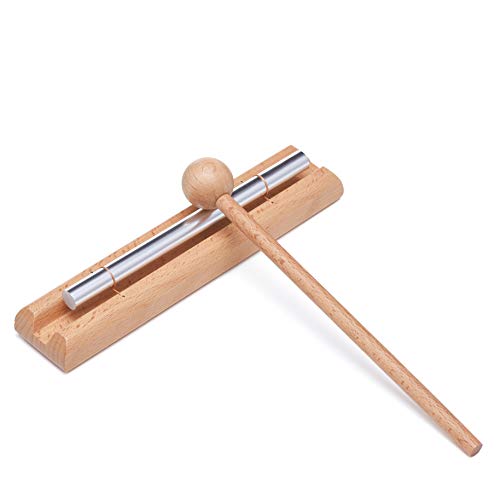
Simple, affordable, and does what a meditation chime should: one tap, one tone, ten seconds of fade. I bought this as a backup for my teaching bag and it has held up to weekly use. Also works as a gentle timer substitute when you want an audible end marker without checking a phone.
Smaller bar means you need a consistent strike; a glancing hit sounds thin. For the price, that is a fair trade. If you are not sure bells belong in your practice yet, this is the low-risk way to test the habit.
6. MGTECH Meditation Chime (Best Sustain)

The echo on this one lasts longer than most bar chimes in the same price range. I notice it most at the end of a sit: one strike, then the sound thinning out as I stand up. That gradual fade beats an abrupt alarm for me.
Storage is slightly awkward because the mallet does not tuck under the base. The stick is thin, so a firmer grip helps. Sound quality is the reason to choose it; organize the mallet in a small pouch if the loose pieces annoy you.
7. Yeshone Hand Bell 2-Pack (Best Value Pair)

Two identical chimes for the price of one premium bar: keep one at home and one in your bag, or give one to a practice partner. Aluminum bar on wood, roughly ten seconds of ring, sturdy enough for daily tapping. I like having a duplicate so I am not hauling gear back and forth every day.
Not the richest tone on the list, but reliable and portable. Teachers on a budget who want a spare classroom chime should look here before spending on decorative brass.
8. Ehome Meditation Chime (Best All-Purpose)
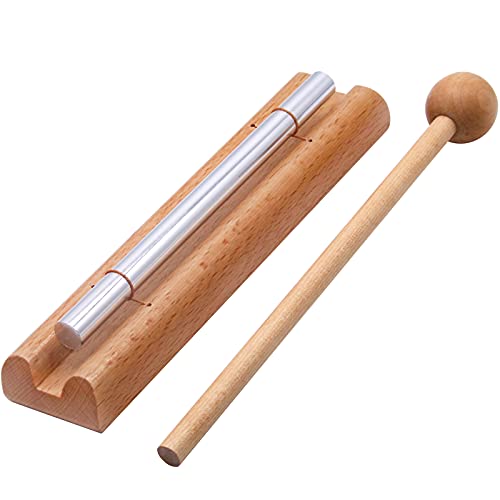
A long-running favorite in meditation and yoga spaces for good reason: natural materials, predictable ten-second decay, and a tone that is bright but not piercing. I have used this in small group sits where everyone needs to hear the same start signal.
Pitch runs higher than some prefer; test once before committing if low tones ground you better. Mallet bag could grip tighter during transport. For mixed home and light teaching use, it still balances price, sound, and durability well.
9. OM Mani Tingsha Table Chime (Best Decorative)

Sand-cast brass with mantra detailing, meant to sit on a table and be struck with the included metal striker. Deeper overtones than flat bar chimes, and the object itself looks like something you keep on display. I use it on a low altar shelf next to a candle on slower weekend mornings.
Ignore the “healing sound” copy; judge the tone with your own ears. The striker takes a light touch to avoid a clang. Beautiful gift for someone building a first home practice corner, especially paired with soft meditation lighting.
10. Artcome Tibetan Bowl and Cymbal Set (Best Complete Starter)

If you want bells and a singing bowl in one purchase, this set covers the opening ritual completely. Bowl for a sustained hum, cymbals for a sharp punctuation mark, plus a bracelet you can ignore or wear if you like tactile reminders. Handcrafted metalwork looks gift-ready out of the box.
Symbolic marketing about auspicious patterns and eliminating suffering is cultural decoration, not a reason to buy. Choose it for the variety of sounds in one kit. Beginners who want to experiment with bowl versus bell before buying separately save money here. Other sensory starters live in my accessories guide, and a candle rounds out scent if you like a fuller opening sequence.
One clear chime beats a vague intention to “sit soon.” Pick the bell that matches your space volume and how much ritual you want, then use it at the same time daily for a week. The sound becomes the habit trigger faster than willpower alone.
FAQ
u003cstrongu003eWhat is the best meditation bell for beginners?u003c/strongu003e
A simple desk chime bar with a mallet is the easiest starting point. One tap produces one tone, no technique to learn. The DOMG Solo Chime or Ehome chime are affordable ways to test whether an audible opener helps you settle before investing in brass hand bells or tingsha cymbals.
u003cstrongu003eHand bell, tingsha cymbals, or chime bar?u003c/strongu003e
Hand bells give a short, bright strike. Tingsha cymbals add shimmering overtones that fade slowly. Chime bars offer a single sustained note with minimal visual fuss. I use a bar for daily home practice, tingsha when I want a longer opening, and hand bells when traveling.
u003cstrongu003eHow loud should a meditation bell be?u003c/strongu003e
Loud enough that you hear the start and end clearly in your own room, not so loud that housemates flinch. Most products on this list suit apartments and bedrooms. For teaching groups, test volume once with a friend at the back of the room before class day.
u003cstrongu003eDo I need a singing bowl and a bell?u003c/strongu003e
No. One marker sound is enough. Bowls sustain and hum; bells strike and fade quickly. Some people prefer bowls for the longer tone, others prefer the crispness of a bell. The Artcome set lets you try both; otherwise pick one and build the habit first.
Do you ring a bell to open your sits, or stay with silence? Tell me in the comments, and follow along on Pinterest for more practical setup ideas.