
I built my first zen meditation garden on a concrete patio behind a rental house in Austin because the living room was too loud and the bedroom felt like sleep, not practice. Three bags of gravel, two flat stones, and a cheap bamboo screen changed how often I actually sat down outdoors. A zen meditation garden is not a landscaping trophy. It is a physical frame that makes stillness easier to find. This guide covers what belongs in one, what to skip, and how to plan a corner that you will maintain instead of abandoning after one season.
Below I walk through the basics, the core elements, how to plan your own space, and what daily upkeep realistically looks like.
Zen Meditation Garden Basics
I came to garden design through meditation, not the other way around. What surprised me was how much the layout mattered: where I placed the seat, what sat in my peripheral vision, whether I could hear traffic. A zen meditation garden works when it reduces decisions. You should not be negotiating clutter, wilting plants, or a hose stretched across your cushion every time you want ten quiet minutes.
Importance of Zen Meditation Garden

The point of a dedicated outdoor practice spot is separation. Inside, dishes, laptops, and unfinished projects compete for attention. Outside, if you design for it, the boundary is visible: a different surface underfoot, a narrower color palette, fewer movable objects. That visual shift helps me switch modes faster than any app timer.
You do not need a large yard. I have seen effective setups on balconies and in small backyard meditation gardens that occupy less square footage than a dining table. What matters is whether the space stays usable through weather changes and whether you will rake, sweep, or wipe it down without resentment. A garden you avoid maintaining becomes another source of guilt, which is the opposite of the goal.
Elements of Zen Meditation Garden

Traditional Japanese dry gardens use a small set of materials repeated with intention. You do not need every element below. Pick three, execute them cleanly, and leave empty space around them. Here is what each one does in practice, not just in symbolism.
Rocks
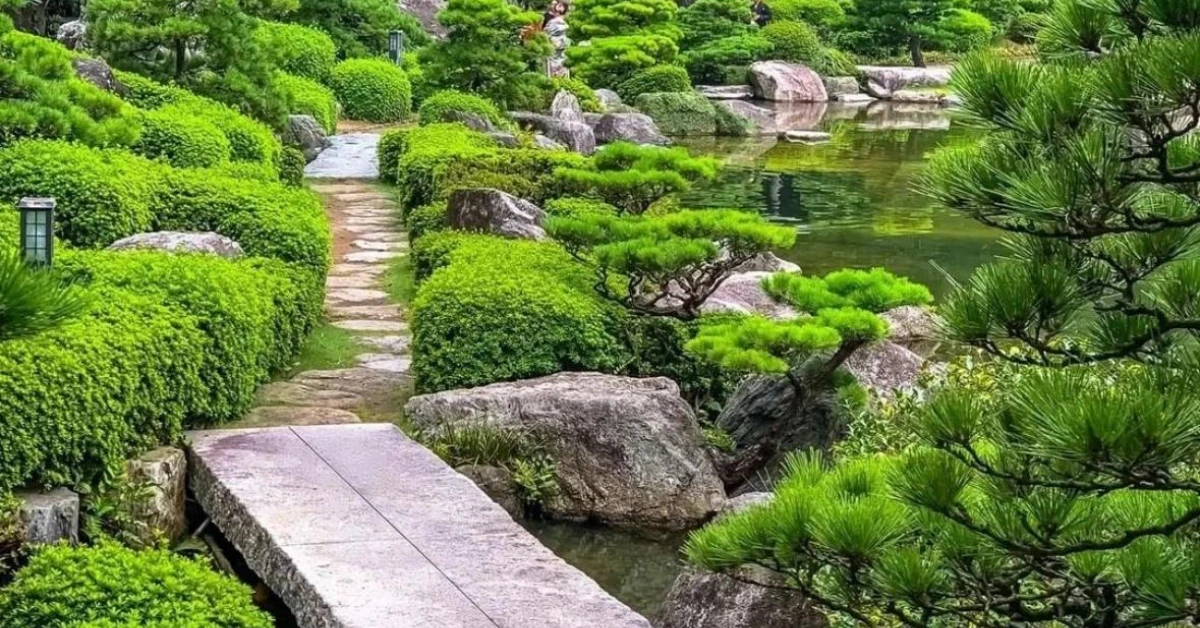
Rocks anchor the composition and give your eyes a resting point. I use odd numbers, varied heights, and at least one stone large enough to feel permanent. Avoid a ring of identical garden-center rocks; it reads as decoration, not structure.
Sand or gravel
A raked gravel surface defines the garden boundary and catches light differently than lawn. Fine gravel is easier to rake into patterns; crushed granite holds up in rain. Plan for edging so the gravel does not migrate into grass or paths.
Water
Even a small bowl of still water changes the acoustic feel of a corner. Fountains mask traffic noise but add maintenance and power cords. I prefer a simple basin I can empty and refill weekly if mosquitoes are an issue in your climate.
Plants
Choose low, quiet plants: moss between stones, compact grasses, bamboo used sparingly as a screen. Flowering plants are fine if bloom cycles do not turn the garden into a chore. One thriving plant beats five struggling ones.
Bridges and paths
A single stepping-stone path tells your feet where to walk so the raked area stays intact. Bridges work when you actually have a level change or dry creek arrangement. Skip decorative bridges floating on flat lawn.
Start with one focal stone, one surface you can rake or sweep, and one place to sit that does not wobble. Add elements only when the current setup feels stable for a month of actual use.
Pro Tip
Creating Your Own Zen Meditation Garden

Building a zen meditation garden is a layout problem first and a planting problem second. I sketch sightlines from the seat before I buy materials. If you can see the trash bins, bright AC units, or a busy driveway from cushion height, fix that with screening or angle changes before you invest in stone.
Selecting the Right Location
Look for morning shade or late-afternoon shade if you live somewhere hot. Austin taught me that a spot with direct noon sun becomes unused by June. Check drainage after rain: a meditation corner that floods is unusable half the spring. Leave enough clearance behind and beside the seat for your legs and for a small table if you use tea or a journal. Quiet matters, but perfect silence is rare; a consistent soft sound (leaves, distant water) is easier to practice with than random traffic spikes.
Choosing Garden Elements
Match materials to your climate and your tolerance for upkeep. Gravel gardens need raking and weed control. Moss needs shade and moisture. Ceramic bowls crack in freeze-thaw cycles unless you store them in winter. I keep a short list of meditation decor that survives outdoors: stone, sealed wood, metal with a stable patina, and fabrics rated for UV if you use cushions outside.
Zen Garden Elements
Water Features
A small fountain can mask street noise. Keep the pump accessible for cleaning. Still water works if you commit to changing it regularly.
Rocks
Group by size: one anchor stone, two supporting stones, optional gravel topdress. Buried one-third deep so they do not shift when stepped on by accident.
Sand
Use for dry raking patterns in contained areas with clear edging. Not ideal under heavy foot traffic unless you enjoy re-leveling weekly.
Plants
Favor evergreens and slow growers. Lavender and jasmine smell good but attract bees; place them away from the seat if that distracts you.
Designing the Zen Garden

When I design a zen meditation garden, I aim for asymmetry that still feels balanced. One strong focal point, open space on at least two sides, and a color palette limited to three tones (stone gray, plant green, one accent). Clutter is the main failure mode: too many statues, too many plant varieties, too many competing textures. For more layout starting points, see these meditation garden ideas and adapt them to your lot size rather than copying photos meant for estates.
Here are some tips for designing your Zen garden:
- Use straight lines and geometric shapes for paths and borders so the garden reads as intentional, not accidental.
- Use contrasting colors and textures sparingly: dark stone against light gravel is enough; you do not need five materials.
- Incorporate a focal point one boulder or planted specimen visible from the seat without turning your head sharply.
- Use lighting only if you will practice at dusk; warm low path lights beat a bright security flood aimed at the cushion.
- Leave blank space on purpose. Negative space is part of the design, not a sign you ran out of budget.
Maintaining Your Zen Meditation Garden

Maintenance is where most zen meditation garden projects die. I budget ten minutes daily and one longer session per season. If that sounds like too much, simplify the design now rather than fighting weeds through summer.
Daily Maintenance
Daily tasks are small and repeatable:
Raking the sand: Light raking resets the surface and can be part of practice, not a chore you resent. I use a small wooden rake and stop when the pattern feels even, not when it looks Instagram-perfect.
Removing debris: Leaves and petals accumulate fast under trees. A two-minute sweep keeps the space invitation-ready.
Watering plants: Water only what you planted. Gravel areas do not need irrigation. Overwatering moss in sun kills it; check soil moisture with a finger, not a fixed calendar.
Seasonal Care
Seasonal work prevents expensive rebuilds:
Pruning plants: Cut back growth that blocks sightlines or drops fruit onto the seating area.
Replacing plants: Swap out failures honestly. A dead ornamental grass is telling you about sun or soil, not your worth as a gardener.
Refilling sand: Top off gravel after heavy rain or foot traffic. Refresh edging if stones migrated.
Indoor practice corners need different care; if you split time between outside and inside, align colors and materials with your meditation room colors so the two spaces feel connected rather than competing.
What to Meditate Upon in a Zen Garden

- The Act of Raking:
- Notice the sound and resistance of the rake. Each pass is one predictable motion you can return to when thoughts scatter.
- Stop when the surface is even enough to sit, not when it is flawless. Perfectionism is just another distraction wearing work clothes.
- The Stillness of Stones:
- Pick one stone and study its edges, temperature, and weight in shade versus sun.
- Use it as a reminder that stable things still change slowly: moss spreads, rain darkens the surface, seasons shift the light angle.
- Moss and Growth:
- Watch how moss fills gaps without forcing. Growth here is incremental, which is a useful contrast to how we usually chase progress.
- If you tend to over-plan life, sit with something that clearly cannot be rushed.
- The Empty Spaces:
- Look at bare gravel or open paving on purpose. Empty space is not missing content; it is room for attention.
- When your mind fills every gap with noise, match your breathing to the quiet parts of the garden instead of fighting the noise parts.
A well-kept zen meditation garden will not fix stress by itself. It makes showing up easier, which is most of the battle. Regular use matters more than perfect symbolism.
FAQ
What is a Zen meditation garden, and how does it facilitate meditation?
It is an outdoor area designed with a small set of materials (stone, gravel, plants, sometimes water) arranged to create a clear boundary for practice. It helps by giving your eyes a simple scene and your body a dedicated place to sit, which makes starting and returning to meditation easier than using a multi-purpose yard.
Do I need a large outdoor space to create a Zen meditation garden, or can it be adapted to smaller spaces?
Large spaces offer more layout options, but balconies, patios, and side yards work well if you limit materials and keep maintenance realistic. A contained gravel corner with one stone and a stable seat can function better than an ambitious garden you cannot maintain.
What are the main elements of a Zen meditation garden, and what do they symbolize?
Common elements are rocks, sand or gravel, moss or low plants, paths, and sometimes water. Symbolism varies by tradition; in practical terms, rocks provide focal points, gravel defines space, plants add living texture, and water or raked patterns give your attention somewhere steady to rest.
How can I use a Zen meditation garden in my meditation practice?
Sit where sightlines are calm, set a timer, and use one garden feature as your anchor (rake marks, a stone, running water). You can practice breath focus, open monitoring, or walking meditation on a short path. The garden supports the habit; your technique still comes from the practice itself.
If you have a zen meditation garden at home, I would like to hear what element made the biggest difference for you: stone, gravel, plants, or something else entirely. Leave a comment with what worked and what you would skip next time.